Shrink wrap packaging has become a preferred choice for manufacturers across India. From bottled beverages and FMCG multipacks to pharmaceutical cartons and industrial components, shrink wrapping offers a clean, protective, and cost-effective packaging method. But while shrink wrapping improves product safety and presentation, it also creates one major challenge for manufacturers—reliable high-speed batch coding.
Printing batch numbers, manufacturing dates, expiry dates, MRP, and traceability codes on shrink wrap film is not as simple as coding on cartons or rigid bottles. Shrink film is thin, glossy, and heat-sensitive, and production lines often run at high speeds. Without the right technology, codes can become unreadable, smudged, or inconsistent—leading to product rejection and compliance risks.
In this blog, we’ll explore the most effective high-speed coding solutions for shrink wrap packaging, the challenges involved, and how manufacturers can choose the right batch coding machine for smooth, efficient operations.
Why Shrink Wrap Packaging Needs Advanced Coding Solutions
Shrink wrap packaging is widely used in industries such as:
- Food & beverage (bottle multipacks, trays, dairy packs)
- FMCG (soaps, shampoo bottles, consumer goods)
- Pharmaceutical packaging (carton bundles, medicine multipacks)
- Cosmetics (skincare products, perfumes, retail packs)
- Chemical and lubricant bottles
- E-commerce packaging and bundled products
For these industries, printing is essential not only for compliance but also for supply chain traceability. A reliable batch coding printer helps manufacturers maintain accurate product identification even at high-speed packaging output.
Common Coding Challenges in Shrink Wrap Packaging
Shrink wrap films are typically made from materials such as PVC, PE, POF (polyolefin), or LDPE. These surfaces create specific printing difficulties.
1. Poor Ink Adhesion on Glossy Film
Shrink wrap is smooth and non-porous. Standard inks may not bond properly, leading to smudging or fading.
2. Heat Exposure During Shrink Tunnel Process
Shrink wrapping involves passing products through a heat tunnel. If the ink is not heat-resistant, the printed code can blur or disappear.
3. High-Speed Production Line Requirements
Shrink wrap lines often run continuously, especially in beverage and FMCG plants. If the coding system cannot keep up, it creates production bottlenecks.
4. Film Movement and Vibration
Because shrink film is flexible, it can move during coding. This may cause misaligned prints or incomplete characters.
These challenges highlight the need for specialized industrial coding solutions that are designed specifically for flexible packaging environments.
Best High-Speed Coding Technologies for Shrink Wrap Packaging
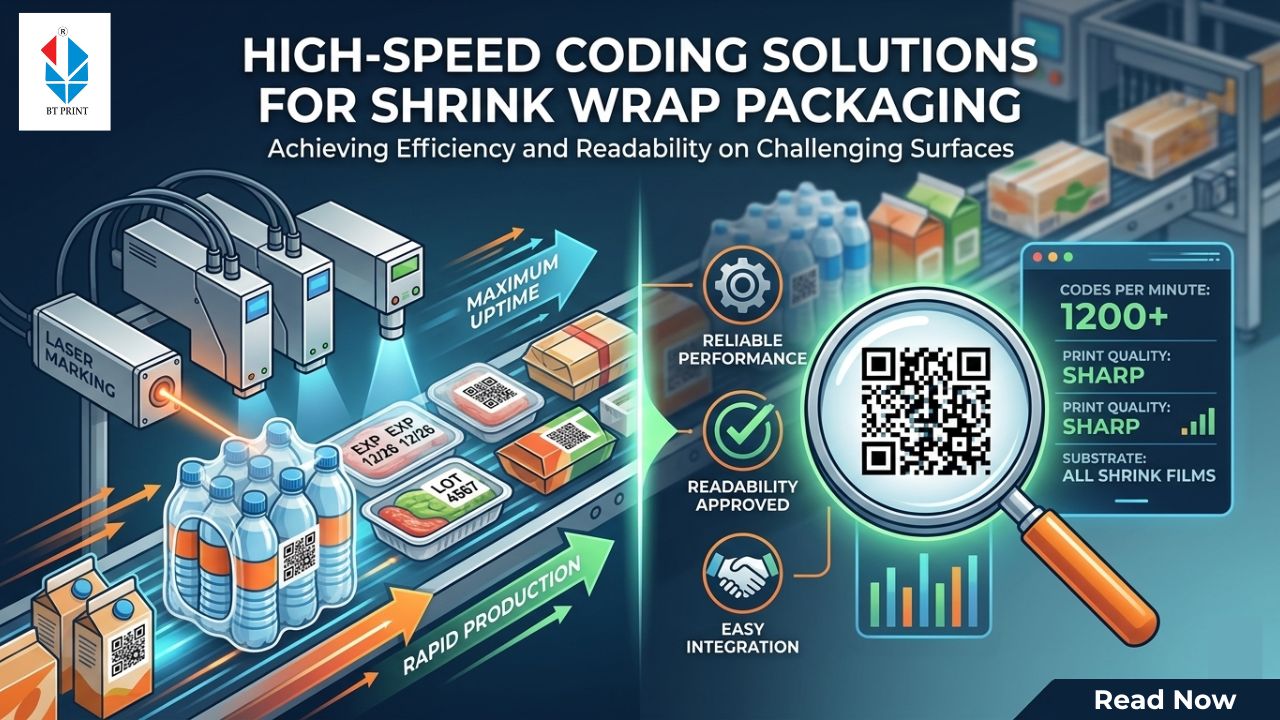
To solve shrink wrap coding challenges, manufacturers typically choose one of the following technologies based on line speed, product type, and print requirements.
1. Continuous Inkjet (CIJ) Printers for Shrink Wrap
The most widely used technology for shrink wrap packaging is the CIJ printer
CIJ printers are ideal because they provide:
- Contactless printing on moving surfaces
- Fast-drying ink formulations
- High-speed performance for multipack lines
- Reliable printing on plastic films
- Easy integration with conveyors and packaging machines
A modern continuous inkjet printer can print batch codes, expiry dates, and barcodes clearly, even on thin shrink films.
Best Industries for CIJ Shrink Wrap Coding
- Beverage bottling plants
- FMCG multipack manufacturers
- Pharmaceutical carton bundling
- Dairy product tray wrapping
For Indian manufacturers, CIJ remains the most cost-effective and scalable solution for high-speed shrink wrap coding.
2. Thermal Transfer Overprinter (TTO) for Flexible Shrink Film
When high-quality printing is required on film packaging, a TTO printer becomes a strong option.
TTO printers are widely used in flexible packaging applications where:
- print clarity is critical
- high-resolution text is required
- branding needs premium-quality codes
TTO printing is done using a ribbon-based heat transfer method. It produces sharp and durable codes on film, making it suitable for retail-ready shrink packs.
Best Use Cases for TTO Printers
- Snack and food multipacks
- Cosmetic and personal care shrink packs
- High-end FMCG bundled products
However, TTO systems require proper film contact and alignment, so they are often used on form-fill-seal or controlled film packaging systems.
3. Laser Marking Machine for Shrink Wrap Packaging
A laser marking machine is an advanced solution for manufacturers looking for permanent, ink-free coding.
Laser marking offers:
- No ink or solvent costs
- Permanent and tamper-proof marking
- Eco-friendly operation
- Low maintenance requirements
- High-speed marking capability
Laser systems work best on certain types of shrink films and coated packaging materials. For manufacturers producing high-volume shrink-wrapped cartons or trays, laser coding can significantly reduce long-term operating costs.
Best Industries for Laser Shrink Wrap Coding
- Pharmaceutical secondary packaging
- Export-oriented FMCG packaging
- Premium cosmetic bundles
Before installation, film compatibility testing is important to ensure high contrast and clear marking.
4. TIJ Printers for Outer Packaging or Labels
A TIJ printer is typically not used directly on shrink film, but it is highly useful when shrink-wrapped packs include labels or outer cartons.
TIJ printers deliver:
- high-resolution printing
- sharp barcodes and QR codes
- clear text on porous surfaces like cartons
For shrink wrap packaging where secondary packaging is involved, TIJ printers become a practical and cost-effective solution.
Choosing the Right Ink for Shrink Wrap Packaging
Ink selection plays a major role in print durability. Shrink wrap lines often require:
- fast-drying inks
- heat-resistant inks
- high adhesion inks for plastic film
A high-performance batch coding machine combined with the correct ink ensures that codes remain visible even after the shrink tunnel process.
Poor ink selection is one of the biggest reasons manufacturers face smudging and fading issues.
Smart Setup Tips to Improve Coding Performance on Shrink Wrap
Even the best printer can deliver poor results if installation and setup are incorrect. Here are the key best practices:
Correct Printhead Positioning
Maintain proper distance between the printhead and shrink film to avoid distorted coding.
Synchronize with Conveyor Speed
Use encoders and sensors so the coding system prints consistently even when speed fluctuates.
Avoid Printing Too Close to Heat Tunnel
If printing is done too close to the shrink tunnel entry, ink may not dry properly before heat exposure.
Use Stable Film Handling
Proper guides and film stabilization reduce movement and improve print alignment.
These steps significantly improve output when using a batch coding printer on shrink wrap lines.
How Automation Is Improving Shrink Wrap Coding
Modern packaging plants in India are shifting toward automated traceability systems. Advanced coding machines now support:
- ERP integration
- automatic code changeover
- QR code printing
- batch tracking and serialization
This is particularly important for pharmaceutical packaging, export FMCG goods, and regulated industries.
With advanced industrial coding solutions, manufacturers can reduce manual errors and ensure compliance across multiple SKUs.
Why Choose BT Print for Shrink Wrap Coding Solutions?
BT Print offers high-speed, reliable coding solutions tailored for shrink wrap packaging applications across India.
We provide:
- High-performance batch coding machines
- Industrial-grade CIJ printers for high-speed film printing
- Advanced TTO printers for flexible packaging films
- High-speed laser marking machines for permanent coding
- High-resolution TIJ printers for carton and label printing
Our team helps manufacturers with machine selection, installation, integration, operator training, and pan-India service support.
Conclusion
Shrink wrap packaging is a fast-growing packaging method in India, but coding on shrink film requires the right technology, proper ink selection, and stable setup. Without the right system, manufacturers risk smudged codes, production stoppages, and compliance failures.
By choosing the correct batch coding machine, using the right CIJ printer, premium TTO printer, high-resolution TIJ printer, or upgrading to a laser marking machine, manufacturers can achieve high-speed coding without losing print quality.
If your shrink wrap packaging line requires a reliable coding solution, BT Print is ready to help you upgrade with the best technology for your industry.
www.btprintopkg.com
9073950891 / 7290033620
sales@btprintopkg.com