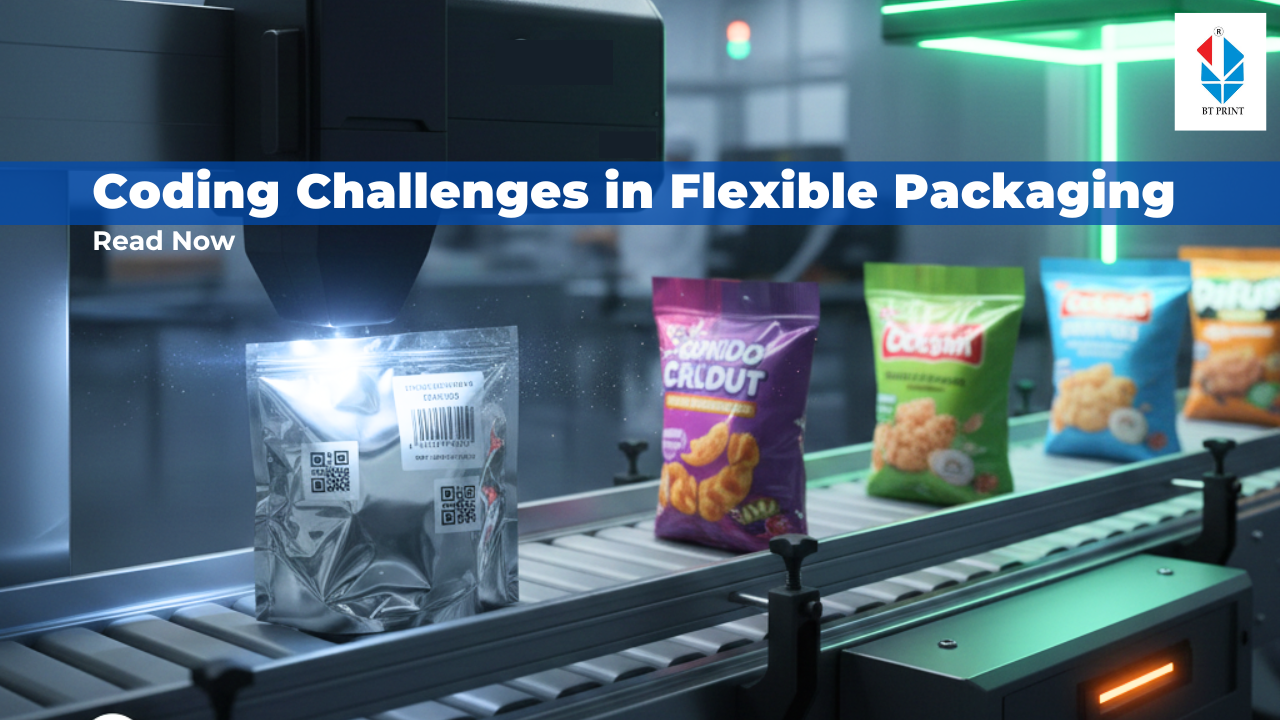
Flexible packaging has transformed the Indian manufacturing landscape. From snack pouches and spice sachets to pharmaceutical strips and personal care products, flexible materials are now everywhere. They are lightweight, cost-effective, and visually appealing. But when it comes to printing batch numbers, expiry dates, QR codes, and MRP details, flexible packaging presents unique coding challenges.
For manufacturers running high-speed lines, coding on flexible materials can quickly become a bottleneck if the right technology is not used. In this article, we explore the most common coding challenges in flexible packaging and how to overcome them using modern Batch Coding Machine solutions.
Why Flexible Packaging Is Difficult to Code
Unlike rigid surfaces such as bottles or cartons, flexible packaging materials are:
-
Thin and compressible
-
Often glossy or laminated
-
Prone to movement and vibration
-
Sensitive to pressure
Traditional contact-based printing methods may smudge, distort, or damage the packaging surface. In high-speed production environments, even minor coding errors can lead to rejections, wastage, and compliance issues.
This is why many manufacturers are upgrading to Continuous Inkjet Printers and other non-contact coding technologies.
Common Coding Challenges in Flexible Packaging
1. Ink Smudging and Poor Adhesion
Flexible packaging often uses laminated films, metallized surfaces, or glossy plastics. These surfaces can prevent proper ink bonding, leading to smudged or faded prints.
This is especially problematic in FMCG and food packaging, where expiry dates must remain legible throughout the product’s shelf life.
Solution:
Using high-performance inks specifically designed for non-porous surfaces solves adhesion problems. Advanced Industrial Inkjet Printers offer specialized ink formulations that dry quickly and resist rubbing, moisture, and heat.
Proper ink selection is just as important as choosing the right machine.
2. Surface Movement During Printing
Flexible pouches tend to move, wrinkle, or vibrate while passing through conveyor belts. Contact-based systems may struggle to maintain consistent print positioning.
This results in:
-
Crooked batch codes
-
Misaligned printing
-
Incomplete characters
Solution:
Non-contact systems such as Continuous Inkjet Printers can print accurately without touching the surface. Their high-speed droplet technology ensures consistent print quality even when packaging materials are not perfectly stable.
Installing proper conveyor guides and stabilization mechanisms further improves accuracy.
3. High-Speed Production Demands
Modern packaging lines in India can run at hundreds of units per minute. Contact-based systems may fail to keep up, causing production slowdowns.
When coding cannot match packaging speed, it becomes a production bottleneck.
Solution:
Upgrading to a high-speed Batch Coding Machine ensures coding keeps pace with the production line. Contactless systems are specifically designed for fast-moving flexible packaging.
This eliminates slowdowns while maintaining clarity.
4. Ink Drying Time Issues
Flexible packaging materials do not absorb ink like cardboard does. If drying time is insufficient, printed codes may smear during stacking or handling.
Solution:
Fast-drying solvent-based inks or UV-curable ink systems reduce smudging risks. Proper ventilation and optimized print settings also improve drying efficiency.
Modern Industrial Inkjet Printers are equipped with adjustable print parameters to match specific packaging materials.
5. Limited Print Area
Flexible pouches often have limited space available for coding. Designers prioritize branding and product information, leaving small areas for batch coding.
Solution:
Compact coding systems with precise character control allow manufacturers to print clear, small-sized text without sacrificing readability.
High-resolution printers also enable QR codes and barcodes in limited spaces.
6. Compliance and Traceability Requirements
Indian regulations for food, pharmaceuticals, and exports require clear labeling of:
-
Batch number
-
Manufacturing date
-
Expiry date
-
MRP
-
Barcode or QR code
Unreadable codes can result in penalties, product recalls, and damage to brand reputation.
Solution:
Automated verification systems integrated with coding machines ensure every print is legible. Many modern coding solutions allow real-time monitoring to detect errors instantly.
For pharmaceutical blister packs and laminated films, Laser Marking Machines offer permanent and tamper-proof marking without ink.
Inkjet vs Laser for Flexible Packaging
Choosing between inkjet and laser depends on packaging material and application.
Continuous Inkjet (CIJ)
CIJ technology is widely preferred in India for flexible packaging because it:
-
Works on most plastic and laminated surfaces
-
Offers high-speed printing
-
Provides cost-effective consumables
-
Is easy to integrate into existing lines
For most FMCG manufacturers, CIJ remains the most practical solution.
Laser Marking
Laser systems are ideal when permanent marking is required. They work well on certain films and laminates, especially in pharmaceutical applications.
Unlike ink-based systems, Laser Marking Machines eliminate consumable costs and reduce environmental impact. However, compatibility testing is essential before installation.
Best Practices to Overcome Flexible Packaging Coding Challenges
To ensure smooth operations, manufacturers should follow these practical steps:
Conduct Surface Testing
Before finalizing any machine, test your actual packaging material. Ink adhesion and print clarity must be verified in real production conditions.
Choose the Right Ink Formulation
Different materials require different inks. Solvent-based, pigmented, or specialty inks may be necessary depending on packaging type.
Optimize Line Speed and Print Settings
Incorrect speed synchronization can affect print clarity. Ensure your coding system is calibrated properly with your packaging line.
Invest in Reliable Equipment
Low-cost machines may result in frequent breakdowns and poor print consistency. Investing in a high-quality Batch Coding Machine ensures long-term reliability.
Ensure Regular Maintenance
Preventive maintenance keeps nozzles clean and ensures consistent droplet formation. Many modern systems offer self-cleaning mechanisms to minimize downtime.
Why Flexible Packaging Manufacturers Should Upgrade Now
Flexible packaging is growing rapidly in India due to rising demand in:
-
Snacks and ready-to-eat foods
-
Spices and condiments
-
E-commerce packaging
As demand increases, production speeds will continue to rise. Coding systems must evolve accordingly.
Upgrading to modern Continuous Inkjet Printers or advanced laser systems ensures:
-
Higher efficiency
-
Reduced rejection rates
-
Lower long-term costs
-
Better compliance
-
Improved brand credibility
Final Thoughts
Coding on flexible packaging is challenging—but not impossible.
With the right technology, proper ink selection, and expert integration, manufacturers can eliminate smudging, improve print accuracy, and maintain compliance even at high speeds.
At BT Print, we help Indian manufacturers overcome flexible packaging coding challenges with reliable, high-performance solutions tailored to their production needs.
Explore our range of:
-
Continuous Inkjet Printers
-
Laser Marking Machines
-
Complete Batch Coding Machine Solutions
If you are facing coding issues in your flexible packaging line, now is the time to upgrade your system and improve efficiency.
www.btprintopkg.com
9073950891 / 7290033620
sales@btprintopkg.com